
Challenger 300 and 3500
The Challenger 300 family is the super midsize jet with the wide cabin. It is about 7 ft 2 in across, wider than the other super midsize jets we source, with a flat floor and about 6 ft 1 in of headroom. Eight seats in the usual layout, a divan on many, and a galley that can serve a hot meal. Range runs from about 3,100 nautical miles on the 300 to about 3,400 on the 3500, so coast to coast is routine and Cabo is easy. The 350 and the 3500 are newer versions of the same airframe: stronger engines and winglets on the 350, then a new cabin, a lower cabin altitude and an autothrottle on the 3500. Clients pick this family for big family trips and long weekends with a full cabin.
Compare the cabin for your next trip, or tell us what you want to own.
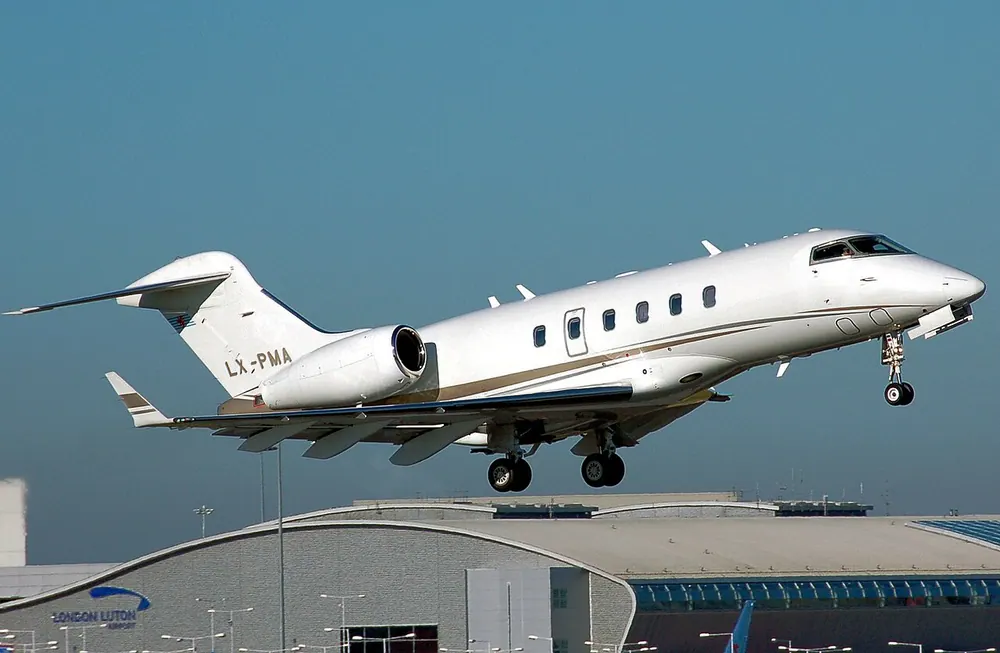
Photo credit
Bombardier.challenger.300.lx pma.arp.jpg by Arpingstone · Public domain. Resized and compressed for the website; no aircraft features altered.
Model examples. Cabins, finishes and equipment vary by aircraft.
Space for the way you travel.
Planning figures vary with the aircraft’s layout, load and conditions. We confirm the proposed airplane’s details with your options.
- Passenger seating
- 8 to 9
- Cabin height
- ~6 ft 1 in
- Cabin width
- ~7 ft 2 in
- Baggage volume
- ~106 cu ft, reachable in flight
- Planning range
- ~3,100 nm on the 300, ~3,400 nm on the 3500
- Typical cruise
- ~460 kt
- Lavatory
- enclosed
- Wifi
- on nearly all, varies by aircraft
- Airframe years
- 2013 to 2023 on the aircraft we see most; the 300 began in 2004, the 350 in 2014 and the 3500 in 2022
How much can you bring?
Listed baggage volume: ~106 cu ft, reachable in flight
Alternative loads · one bag type at a time
How we estimate bag counts
We allow 60 to 80% of the listed baggage volume for packing. Assumed external dimensions: checked bag 28 × 20 × 12 in; golf travel bag 50 × 16 × 12 in; weekend bag 22 × 12 × 12 in. Counts are rounded down and show separate loads, not a combined allowance. Unspecified extra storage is excluded.
Volume estimates only. Bag shape, compartment doors, weight and fuel requirements determine the final fit. Tell us about mixed luggage, skis or bulky items.
Include your baggage in a quote request →- Which version the tail is: 300, 350 or 3500, and the year. All three share the airframe and the type rating, but the 3500 has the newer cabin, a lower cabin altitude and an autothrottle, and the feel inside differs.
- Runway and weight for the day at a high or hot field. Aspen in July and Cabo in August are where a pilot runs the numbers with the full passenger list and the bags before saying yes.
- Crew time on type, plus the divan and galley layout of the proposed airplane. Cabins differ across this family.
Interested in buying a Challenger 300 and 3500?
Tell us what you are looking for. We can discuss this model and let you know if an aircraft matching your requirements comes to market.
The aircraft shown illustrates the model. It is not a specific listing for sale.
- 1 · Trip
- 2 · Contact
- 3 · Options
Enter your trip and contact details to receive a planning estimate by email. No payment is required.
Explore a route.
Dallas to Cabo San Lucas
Super midsize jet, round trip · 8 to 10 seats
Explore the route and cabin options →
APF to BEDNaples to Boston
Super midsize jet, round trip · 8 to 10 seats
Explore the route and cabin options →
BNA to OPFNashville to Miami
Super midsize jet, round trip · 8 to 10 seats
Explore the route and cabin options →
Challenger 300 and 3500 questions.
What is the difference between the Challenger 300, 350 and 3500?
Same airframe, three generations. The 300 came first, in 2004. The 350, from 2014, added stronger engines, winglets and more range. The 3500, from 2022, keeps the 350's performance and adds a new cabin, a lower cabin altitude and an autothrottle. All three fly the same routes; the newer ones feel newer inside.
How many people fit in a Challenger 300 or 3500?
Eight in the usual layout: a club of four, two facing seats and a divan for two. Some tails seat nine. With eight adults and a weekend of bags the aircraft is still well inside its weight limits on nearly every corridor leg, which is why it is the family trip aircraft in this category.
Can a Challenger 300 fly Dallas to Cabo nonstop?
Yes, with room to spare. Dallas to Cabo is about 900 nautical miles, a little over two hours, against a range of about 3,100 nautical miles. The operator handles the permits and the customs paperwork. You bring a valid passport for each traveler, and a pilot tells you which US port of entry you clear on the way home.